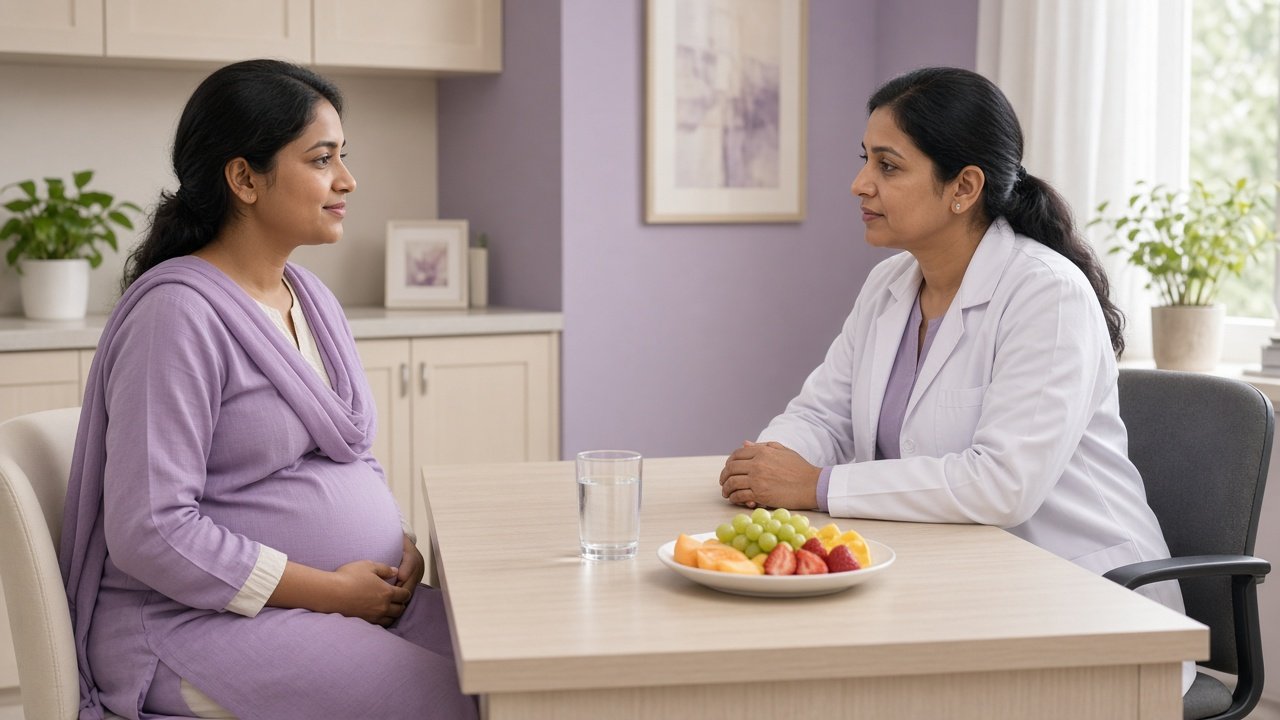
Short answer. On World Diabetes Day, 14 November 2026, pregnant women in Khammam should know that a sugar test is a routine part of antenatal care, often around 24 to 28 weeks, and earlier if there was previous gestational diabetes, PCOS, a large previous baby, or a strong family history. Dr. N. Jyoshna Peddineni at Nehrunagar uses the result to plan meals, reviews and, when needed, medicine. Very high readings, reduced baby movements, or repeated vomiting need a same-day call on +91 93472 34197.
Who should be tested, and when
Gestational diabetes is high blood sugar that is first found in pregnancy. Many women feel well, so the test is how it is found. A glucose check is commonly arranged between 24 and 28 weeks. Women with previous gestational diabetes, PCOS, higher body weight, a previous baby over 4 kg, or diabetes in a parent are often tested in the first half of pregnancy as well.
One high reading is interpreted with the full test, not with a single sweet meal the night before. Bring the report to your next visit. Do not start or stop tablets from a relative's prescription.
- Previous gestational diabetes
- PCOS or a family history of diabetes
- A previous large baby or unexplained stillbirth
- Sugar already found on an early blood test
- Excessive thirst, repeated urine infections, or a very large fundal height
What changes after the diagnosis
Most women start with a meal pattern: smaller portions, more vegetables and protein, and fewer juices and sweets. Walking after meals helps many people. Home sugar checks are added when the numbers need watching. Insulin or tablets are used if food changes are not enough. That decision is individual. It is not a failure of effort.
After Diwali sweets and family meals, a planned plate matters more than skipping food. Long gaps can make the next reading swing. Dr. Jyoshna Peddineni also times growth scans when the baby’s size or fluid needs a closer look.
After the birth
Sugar often settles after delivery, but the later risk of type 2 diabetes is higher. A postnatal sugar test is part of finishing the story, usually in the weeks after birth. Breastfeeding, a return to walking, and a yearly check are the practical follow-up for women in Khammam.
Related care at the hospital
Clinic: Dr. Jyoshna Maternity and Fertility Hospital, 11-4-3/2, Beside old CPI office, Nehru Nagar, Khammam, Telangana 507001. Phone +91 93472 34197. OPD 9:30 AM–3:00 PM and 6:00 PM–9:00 PM. Emergency 24×7.
This article is general education from the clinic. It does not diagnose, prescribe, or replace an in-person consultation. For heavy bleeding, severe pain, fainting, leaking fluid, or a sudden drop in the baby's movements, seek emergency care.
More from November 2026
- Diwali Week Postnatal Care in Khammam: Rest, Feeding and Warning Signs
- World Prematurity Day: Preterm Labour Signs Women in Khammam Should Not Wait On
- Heavy Periods and Fibroids: When Women in Khammam Should Book a Review
- Cervical Screening in Khammam: Who Should Book a Pap Smear Before the Year Ends
Questions patients ask
Direct answers for this topic. Your own plan still depends on a consultation.
For many women it is between 24 and 28 weeks. It is done earlier when risk is higher, including previous gestational diabetes, PCOS, a large previous baby, or diabetes in the family. Your obstetrician sets the date at the booking visit.
Not always. A large share of women manage with meals, activity and monitoring. Medicine is added if sugars stay above the target your doctor sets. The target is explained at the visit. It is not copied from a general internet chart.
A small planned portion with a proper meal is different from grazing on sweets all evening. Check the pattern with your clinic before Diwali week, and do not skip the next sugar reading because of a celebration.